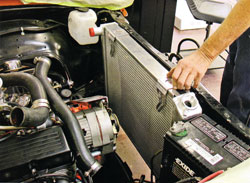
 Pump the throttle, fire the motor, hear the exhaust note, and the driving fun begins. There‘s nothing quite like commanding a musclecar‘s engine with a gas pedal. That is, unless the temp gauge creeps past midway and continues farther and farther to the right. Then, what started out as a cool ride quickly turns into a heated situation. At this point, all you can do is turn off the key, pop the hood, and attempt to find out why the engine runs so hot.
As most hot rodders know, an internal combustion engine makes power by converting the energy fuel into heat and mechanical work. Generally, one third of the fuel energy is used to move the vehicle, one third travels to the exhaust system, and one third is heat transferred to the engine‘s cooling system and into the ambient air. Problems can arise if the engine is modified to increase horsepower, or if the existing cooling system is marginal. You may find the cooling system is unable to stabilize the engine temperature within an effective range (too much heat load), the coolant temperature may climb to a boiling point, and engine overheating can result. Before this happens, it‘s best to take the time to understand and improve your engine‘s cooling system.
The Basics
A cooling system basically consists of a radiator, a water pump, a thersmostat, a pressure cap, upper and lower hoses, at least one fan, pulleys, coolant, and often a shroud. The coolant is typically a blend of water and antifreeze. The antifreeze solution is used to lower the freezing point, raise is the boiling point, and contribute additives that prevent corrosion from forming in the system. The system is pressurized, which also acts to raise the coolant‘s boiling point and to transfer heat more efficiently from the cylinder heads. The coolant is propelled by a water pump and travels inside the engine (through water jackets), where it absorbs heat. The coolant then exits into an upper radiator hose and flows to the radiator core. There, the heat transfer provided by air flowing through the radiator‘s fins will cool the fluid before it reenters the engine.
Radiators
Radiators transfer the coolant heat to the air passing through the core. To do this, radiators are engineered in a variety of designs that allow both coolant and air to flow efficiently through the radiator so the coolant temperature drops significantly before cycling back into the engine. As coolant flows through a radiator, it does so at a velocity sufficient to cause turbulence. This action circulates the coolant from the middle of the tube (row) to the edges. This enhances heat transfer between the coolant and the tube surface where incoming air (moved by a fan and vehicle movement) flows across the fins and lowers the coolant‘s temperature inside the radiator. As the liquid continues to travel inside the radiator toward the lower radiator hose, more cooling occurs. Once it finally reaches the lower radiator hose, the now cooled liquid is recycled back into the water pump and reenters the engine where it once again will absorb the engine‘s heat. This process repetitively occurs as the engine is operated.
The sizes of the radiator‘s surface area, tube dimension, and cross section are critical. For optimal cooling performance, many of today‘s radiators use wider tubes with greater cross sections that provide more surface area per cubic inch of coolant. These radiators allow the radiator to transfer heat better than older designs that used up to four our five narrow tubes with shorter cross sections.
Aluminum vs. Copper Brass Radiator Assemblies
For decades, original factory radiators were made from copper and brass assemblies that were soldered together. Since the late ‘80s, most original equipment radiators and many new performance radiators, such as those from Griffin and Be Cool, are made from aluminum. Typically, these offer weight savings over copper-brass units. Although aluminum alone does not generally dissipate heat as well as copper-brass materials, aluminum radiators offer a significant benefit because they dissipate heat more efficiently than traditional copper-brass radiators. The reason is simple: a copper-brass radiator assembly is soldered together, and the solder is a poor thermal conductor, which reduces the ability of the fins to remove heat from the tubes. For those wanting to maintain a factory look, restoration suppliers offer many improved copper-brass radiators with denser fin counts and larger capacities. Although they look like the factory originals, they generally cool far better than earlier radiators because they are more efficient.
Crossflow vs. Downflow Radiators
Since the late ‘60s and early ‘70s, most new cars have been equipped with crossflow radiators, replacing the earlier downflow radiators. Crossflow radiators have allowed vehicle designers to lower the hood height of the body, providing a more aerodynamic body shape. Crossflow radiators also offer a couple of improvements. First, the radiator cap on a crossflow is located on the low-pressure suction side of the system. This prevents the pressure created by a high-flow water pump forcing coolant past the radiator cap at high rpm (such as typically found on downflows). Second, a crossflow radiator positions the upper and lower radiator hoses at the opposite ends of the radiator so the ultimate cooling will occur. Many downflow radiators do not share this diagonal positioning. In the few instances, though, where a crossflow and a downflow radiator share equal size and efficiency with oppositely placed upper and lower radiator hoses, the cooling performance will generally be even.
Keep It Regulated
So that faster warm-ups will occur, a thermostat is positioned in the system to serve as a gate, or regulator, to stop the flow of liquid until a temperature benchmark is reached. Most thermostats are rated at 160, 180, or 195 degrees F. For colder-weather operation (below 60 degrees F ambient), a 195-degree thermostat is usually a good choice because it allows the engine to reach a higher operating temperature quickly. If a colder thermostat, such as a 160, is used during cold weather, the engine may never reach operating temperature and the heater may not produce hot air.
During summer weather, installing a colder, 160- or 180-degree F thermostat can often be done to drop the engine‘s operating temperature if the cooling system is more than capable of surpassing the hear load requirements placed on it. If the cooling system is marginal at best, installing a colder thermostat during hot weather will have no effect on the engine‘s operating temperature.
Don‘t be tempted to remove the thermostat altogether. When this is done, the water flow is unregulated and may circulate so quickly that the engine may never reach operating temperature. Removing the thermostat may even cost horsepower because more power is needed to operate the belt-driven water pump when the coolant circulates too quickly.
Fan Fare
Most musclecars were factory-equipped with either a direct-drive multi-blade mechanical fan or a mechanical fan with a clutch drive. Both these systems may work reasonably well on musclecars that retain the original displacement or power levels. If bigger displacement or more power is produced from the engine, an improved fan system may offer improved cooling efficiency at low vehicle speeds. Flex fans can provide better airflow at low vehicle speeds because the fan blades retain a sharp pitch that produces increased airflow at there rpm. At above 5,000 rpm, however, the blades will flex into a straighter position and can produce vibration from air turbulence.
With any fan system, a good shroud should be used to funnel the air away from the radiator core. We‘ve tested cars with and without fan shrouds and found huge increases in coolant temperature without a shroud, especially when the vehicle is operated in slow traffic or at a standstill.
Electric fans offer a great alternative to mechanically driven fans if original appearance is not a concern. The best location for an electric fan is on the pulling side (engine side) of the radiator. If an electric fan is placed in front of the radiator, it may block the flow of incoming air. Unlike mechanical fans, electric fans do not tax engine power to operate.
Water vs. Antifreeze
For street-driven cars, it‘s best to use a blend of antifreeze and water to protect the engine from freeze damage. But for the ultimate cooling efficiency, straight water has 2.4 times greater thermal conductivity and a better heat transfer rate than an antifreeze solution because water is less viscous. If you do elect to run straight water, be sure to add a container of antirust to the system. Of course, use the trick only in areas where freezing will never be encountered, otherwise you risk damaging your engine.
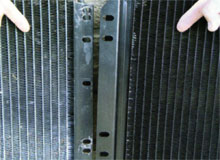 1. Radiator cores with high fin counts (right) generally transfer heat more efficiently than radiators with lower fin counts (left) because there is more surface area for the coolant to flow through, and more of the coolant is presented to the air at any given time. For most performance engines, it‘s best to run a core with a 12- to 16-fin count per inch. Fin counts that exceed this range often restrict airflow through the radiator.
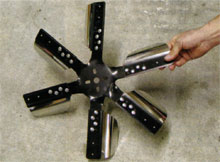 2. Flex-blade fan systems can offer reasonably good airflow as long as a six- or seven-blade fan is used with a shroud. Fan blade shape also plays a roll in cooling efficiency. A flex fan keeps a sharp blade angle at low speed and idles to increase airflow and flexes out to a straighter position at high speeds to reduce drag.
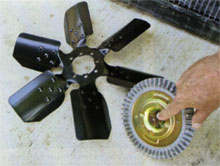 3. A fan clutch and six-blade fan, such as these from OPG, work well to keep medium horsepower engines cool. There are two types of fluid-driven fan clutches — the thermal type and non-thermal type. The thermal type is superior and is identified by a bimetal spring (shown). This type engages the fan at about 170 degrees F, as measured behind the radiator. Thermal types operate the fan at about 60 to 80 percent of engine speed (when engaged). This also improves fuel economy at lower temps. The lower-cost non-thermal type is almost always engaged.
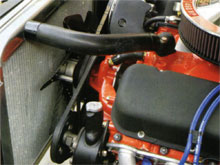 4. This big-block Chevelle is fitted with a good aluminum radiator, flex fan, and no shroud. Since this car is from the California coast, where ambient temps almost never exceed 85 degrees, extreme cooling issues are not a concern. For almost all other locations, it‘s best to run a fan shroud for optimal cooling. We‘ve tested configurations both with and without shrouds and have as much as a 30-degree swing in engine temp (recorded at idle) in warm weather.
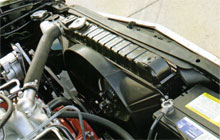 5. To retain the original look and increase cooling capability, the owner of this Chevelle installed a big, four-row desert cooler radiator from OPG. It looks almost identical to the original radiator, but the radiator core features a high fin count. The shroud, fan, and fan clutch are reproduction items from OPG.
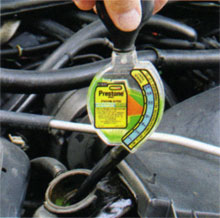 6. If cold weather is in the forecast, make sure your engine has enough antifreeze to provide protection from freezing. To keep the system clean, it should be flushed at least every two years. Remember to also check the belts, hoses, and radiator cap and replace them periodically.
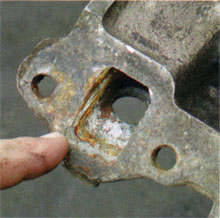 7. If your cooling system is not flushed on a regular basis, aluminum-damaging electrolysis can take place that will cause rapid component corrosion. The condition may also occur if there is a defective or missing ground strap to one of the numerous potential electric sources. To minimize this risk, make certain that your engine retains good ground straps and don‘t be tempted to ground electrical items to the radiator.
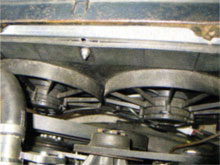 8. The installation of electric fans typically requires relays and a powerful and properly operating electrical system with adequate grounds. Electric fans operate best when installed behind the radiator, instead of in front, where they can impede airflow. Most high-performance V-8 engines require 2,800-2,900 cfm of air movement for good cooling.
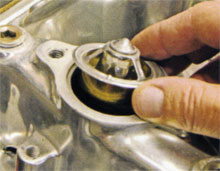 9. If you‘re using a high-flow water pump, note that it‘s often a good idea to drill a 3/16-inch bypass hole in the thermostat‘s poppet valve due to the increased flow. This small opening allows some coolant to move past the thermostat during cold starts.
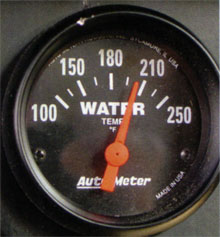 10. The best operating range for most performance engines is from 180-210 degrees F. Install a good gauge to monitor engine temps and remember to include a good ground. Tech tip: Gauges with poor grounds will often read higher with the headlights on and the gauge light activated.
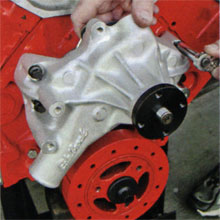 11. An Edelbrock Victor water pump improves water flow by using computer-de-signed pump passages that allow even liquid flow with higher velocity at all engine rpm. Inside the pump, the impeller is CNC-machined. The Edelbrock small-block pump (EDL-8811) is available from Summit (www.summitracing.com) for $150. Most stock water pumps are manufactured to operate at relatively low engine rpm and do not provide adequate coolant flow to meet many high-performance demands.
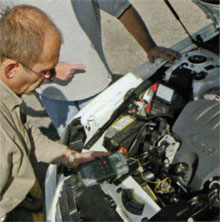 12. This police Impala‘s engine oil temp is being checked during a Los Angeles County Sheriff‘s department pursuit-vehicle test evaluation. After more than an hour of road-course testing at speeds in excess of 100 mph, the engine oil temperature stayed in check at 201 degrees F. Most police cars are factory equipped with high-quality external engine oil coolers mounted just ahead of the radiator. If you‘re looking for a good used oil cooler, an old police vehicle at your local wrecking yard may be a source.